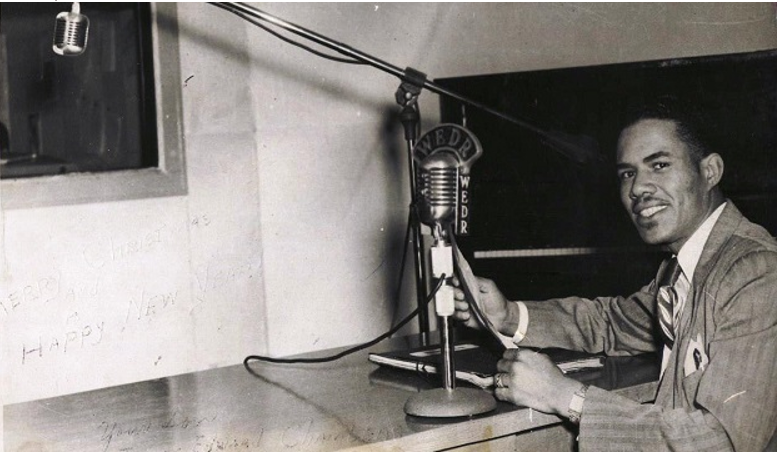
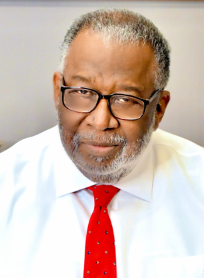
Jim Lawson: Alabama Broadcaster’s Association Hall of Fame Inductee

The BBRM Director, board and staff congratulate Jim Lawson, his family and friends for his induction into the Alabama Broadcasters Association Hall of Fame.

The curricula for all broadcasting majors should include a new course of study – Jim Lawson 101 – where students would learn “old school” values, like how important it is to genuinely care for your audience and using radio for the good of a community. Because of his genuine love of Tuscaloosa and the people of west Alabama and his dedication to radio, the Alabama Broadcasters Association is more than proud to induct Jim Lawson into the ABA Hall of Fame.

“Jim is a true local treasure, giving freely of his time and resources to help others,” says Jimmy Shaw, president of JRD Inc. and the person who nominated Lawson for the induction. “He has always done so much for the Tuscaloosa and the west Alabama community.”

 “Shaw is no nonsense. He wouldn’t just nominate anyone if he did not think they were deserving,” says Mildred Porter, Operations Director at WQZZ. “So, this is going to give Jim a sense that he’s really respected in this business, and it has really humbled him.” “It was a total shock – very pleasant – but a total shock,” says Lawson about learning of his induction. “This one is special because this is from my peers. A lot of other recognitions have been from people outside of the industry. I was really pleased that my friends did see fit to nominate me.”

Lawson was already hooked on radio after his first year at Morehouse College in Atlanta. During that summer break he created an audition tape. He bought some records, wrote his own spots and even made a news break. He says that’s all he knew about radio.

 It was enough. A broadcasting journey that is chock full of interesting anecdotes, occasional struggles and many successes brought Lawson from WEUP in Huntsville, to WJLD (1960s) and WENN in Birmingham, right up to the present where he owns three Tuscaloosa/Green County stations: WMXB, WWPG and WQZZ.

 But the way he uses radio to care for others deserves the spotlight, too. For instance, when Stillman College went through a hard time keeping up with maintenance and paying staff, Lawson used his daily radio show to raise over $100,000 for the school in just 30 days. Recently when Lawson heard a student at the University of Alabama had the opportunity to study abroad, but didn’t have the funds to do so, Lawson raised funds for him to go.

 “We’ve helped people pay house notes. We’ve helped people get roofs on their houses. We have voter registration drives”, says Lawson, “Sometimes I tell him we’re going to go broke with all this stuff that he’s doing,” laughs Porter. “But if he promised he’s going to do something, Hell or high water, he’s going to do it!”

 “Radio is an avenue that could lead to change. And I tell people, this is your radio station, so use it. This is why we are here.” “So much has changed in radio, but we’re holding it together so that the personality is still there. For those of us who love radio so much, it’s more than just the frequency on the dial and a place to place commercials,” Lawson explains.

 Lawson says he’s tried to retire several times, but it never worked out.  “There’s always so much left to do,” he says. “Retirement is not in his vocabulary,” smiles Porter. “I don’t mean for this to sound morbid, but he would die a happy many if he took his last breath sitting in front of a microphone.”

 “I don’t know what else to do,” says Lawson. “It’s just … that’s just my life.” “Radio has been a driving force with me, “ says Lawson. “Some places I have worked for no pay. That shows you how nutty I am.”
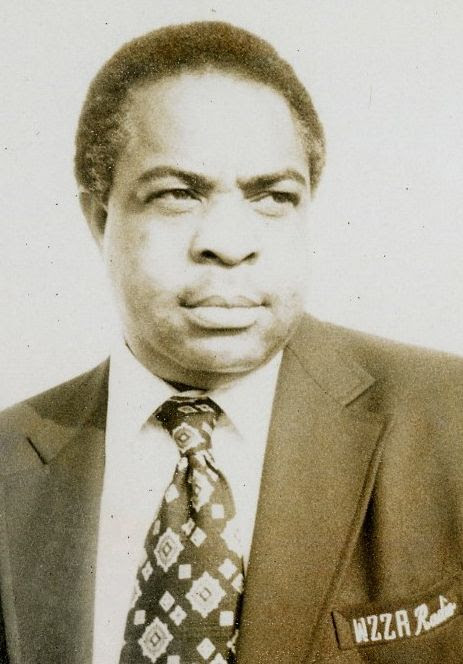
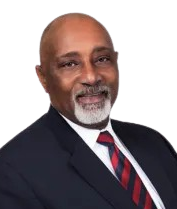
Robert “Bob” Carl Bailey: Alabama Broadcaster’s Association Hall of Fame Inductee

Robert “Bob” Carl Bailey (October 13, 1935 – April 16, 2001)

Robert “Bob” Carl Bailey was the first African American to own a radio station in Northwest Alabama and the first to operate a Black formatted radio station in the Florence-Muscle Shoals area. His broadcasting career, coupled with everything he did to help the Black community through government involvement, social work and out of the goodness of his heart has earned Bob Carl Bailey an induction into the Alabama Broadcasters Association Hall of Fame.

 “My father could do anything,” says his daughter Tori Bailey. “He had an engineer’s license and I used to call him MacGyver because he could take a paper clip and some gum and make pretty much anything work!”

 “When we began receiving CDs from record labels, dad told me to write them letters and tell them we wanted to continue to receive our music on vinyl,” she laughs. “And I had to explain about how they didn’t make beta anymore – it’s VHS now. He had me figure out how to slice wire to make the connections work. And I did.” Bailey found solutions beyond the engineering variety.

 “There are people who tell me these stories about how he made a difference in their lives. He would hear about a problem and then he would resolve it,” says Tori. “For instance, there were some attorneys who came here – a small shop – and they didn’t have a lot of resources. So, Dad paid for their secretary’s salary for an entire year, just so their business could make it.” “He bought a truckload of coal, and had it delivered to a gentleman who lived out in a very insubstantial house. He didn’t ask what was needed. He saw a need and fulfilled it.”

Bailey was one of the first African American music retailers. He owned three record stores with his wife, Odessa. “He was the first African American to serve on an Alabama governor’s cabinet because he asked, ‘What are you doing for small businesses? Small businesses collectively employ more people than these major corporations that you’re courting.’ The governor agreed and Dad began to go all over the state asking, ‘what do you need?’” 

“Bob Carl introduced Jimmy Hughes to Rick Hall,” says Brian Corrigan, a Music Preservation Consultant with the Muscle Shoals National Heritage Area (MSNHA).  “And that yielded ‘Steal Away’, one of Rick Hall’s first big hits as a producer and sort of put Muscle Shoals on the map.” Through MSNHA, Corrigan is working to get Bailey’s WZZA a National Heritage Site designation. His research has made him somewhat of a Bob Carl Bailey aficionado.

 “When James Brown was in town for a concert and discovered there were no black radio stations,” continues Corrigan, “he suggested to Bob Carl that he should open his own station. It took him six or seven years from that point to get from first being hired as a manager at WZZA to then eventually becoming part owner.” Speaking of recognition, it was earlier this year that Bailey was honored in Leighton with a historical marker, changing First Street to Bob Carl Bailey Memorial Drive.

 “My dad had another kid,” smiles Tori. “This kid was this radio station. He spent so much time here, and it mattered so much to him. I think he would be proud of the fact that it’s still here, still servicing the public that didn’t have that voice before this radio station came to be.” “And he used the radio as a forum to do that, to bring attention to these challenges that were faced by people that maybe would otherwise go overlooked, unaddressed. And so he was an advocate, and the radio station helped him to advocate for the people in the Shoals area and beyond.”

“I’m so hoping that we continue that legacy, that we continue to do that, that we see what needs doing, and we do it. We see a need and we fill it. And I’m hoping that we can do just half of the things that he did during his time that he walked this earth.” “I think he would be very proud to know that there are people who remember his contributions, what he did, who he was.”

Gary Richardson: Alabama Broadcaster’s Association Hall of Fame Inductee

Hall of Fame inductee Gary Richardson

 The BBRM Director, board and staff congratulate Gary Richardson and family for his induction into the Alabama Broadcasters Association Hall of Fame.

This Hall of Fame inductee dreamed of an on-air radio career as a very young man. But he had extraordinary skills in electronics and engineering. Could he do both? Yes – and then some. The Alabama Association of Broadcasters is delighted to include Gary Richardson as an inductee in its Hall of Fame.

Like so many successful broadcasters, Richardson’s aspirations started early. “I had a little portable cassette recorder and I’d been secretly recording myself for years imitating the DJs on the radio,” explains Richardson. “My family and friends would say, ‘Wow! You sound just like the guys on the radio.’”

 Although Richardson liked the idea of being on air, he was mainly interested in electronics and engineering. “During my sophomore year in high school, we built an AM campus radio station, and my focus was on learning the electronics and experimenting in science,” says Richardson. “But a teacher heard me read a report and she told me I had a great voice for radio. I was using my ‘radio voice’ and didn’t know it.”  

After high school and a stint with the Army Reserves, Richardson worked at WJLD and WZZK. Gary also earned several degrees, including an associate’s degrees in mass communication and electronic engineering technology from Jefferson State Community College, a bachelor’s degree in electronic engineering technology from Excelsior College in Albany, New York and a Bachelor of Business Administration from Faulkner University in Montgomery. He also has a master’s in education from Alabama A&M University.

 Beyond his degrees from colleges and universities, Gary learned from many of Alabama’s great broadcasters including the late Bob Carl Bailey, a black radio station owner and a member of the ABA’s Hall of Fame. “In the back of my mind I’d been thinking, ‘I’m going to own a radio station,’” says Richardson. “When I told this guy about it, he sat there and talked to me for three hours about what I needed to learn and how to go about acquiring one.” Richardson got back into engineering thanks to some faulty wiring. It seemed that every time the jocks pushed the microphone button, they’d get shocked!

“The owner said, ‘Hey, if you can make that light come on outside the studio without these guys having to wear gloves, you’re hired,’” laughs Richardson. “He made me the chief engineer and later the station manager.” That was just the beginning. Richardson formed Richardson Broadcasting Corporation and bought his first radio station in 1987. The company now owns and operates two radio stations, a low-power television station and two FM translators. For the past almost forty years, he has hosted a popular morning talk show. Plus, he developed the concept of “Cable FM”. “Via the cable, you splinter off your receiver antenna, connect the cable to your FM receiver and tune into a frequency – and boom, there it is,” says Richardson. “It allowed AM stations to broadcast on FM.”

 “His awareness of what could be done with radio is astounding,” says Bob Friedman, founder of the Birmingham Black Radio Museum and longtime friend and broadcaster. In fact, it was Friedman who told Richardson about his induction into the Hall of Fame. “You know, he started crying,” says Friedman. “He’s done all these things with radio in this market as a broadcaster, an owner and an African American. Being the first at this and the first at that, taking risks and all of that. It’s time for him to be recognized.” Richardson’s life is full. He still hosts his highly popular morning talk show and he’s serving his fifth term as mayor of Midfield. With all of that, he’s still thinking about the future.

 “I learned early on that if you don’t get bigger, you get out,” laughs Richardson. “I’m always looking forward and I don’t think I’m ever satisfied in this business.” Friedman sums it up perfectly. “He really loves radio. Like nobody’s business.”

Alabama Broadcasters Association Inducts Paul “Tall Paul” White

On August 13, 2022, legendary Birmingham broadcaster and civil rights activist Paul “Tall Paul” White was inducted into the Alabama Broadcasters Association (ABA) Hall of Fame at Ross Bridge Resort in Hoover, Alabama. Seen here are WATV broadcaster Ron January, Ullman High School Civil Rights activist Gwen Sanders Gamble. BBRM Director Bob Friedman, Paul White’s great niece Eugenia Hood with great grand daughter Autumn receiving the award for the family, and ABA Director Sharon Tinsley.