
This summer, I had the privilege of interning at the Birmingham Black Radio Museum (BBRM). Founded by Bob Friedman, the BBRM serves to chronicle the city’s African American radio legacy from the 1930s through the 1980s, when AM radio was the most accessible frequency to listeners. Collecting oral histories and important ephemera, the BBRM archive highlights the evolving culture of the medium and its impact on the community as the broadcast format expanded over time.
Working within this important archive, I gained hands-on experience in historical research, archival processing, and data management, all while learning about the dynamic role Black radio played in shaping Birmingham’s social and political life.
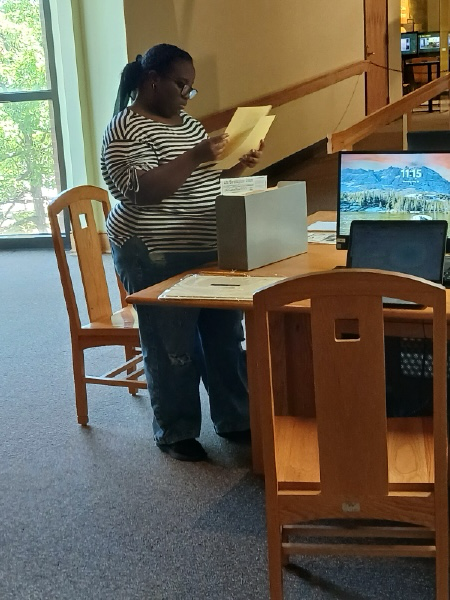
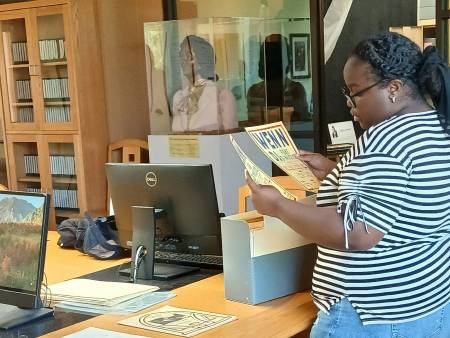
My primary focus this summer was creating a finding aid for a new archival collection centered on Rev. Dr. Erskine Faush – a pastor, radio broadcaster, and gospel concert promoter who helped bring national gospel talent to Birmingham stages and airwaves. The materials for the collection were generously donated by his wife, Audrey Faush. When I was first introduced to the various documents and ephemera, I was amazed by the condition and amount of items—receipts, handwritten notes, programs, and even tickets from events he had organized were all pretty well-preserved. While I was eager to begin processing the materials, I also recognized how new this work was for me. For the first two weeks of my internship, I focused on carefully documenting everything I could and taking notes of what the collection included without moving much around.
Through that process, I realized the complexities of archival work. Since the materials weren’t pre-organized, I had to think critically: What was the best way to arrange them? Which items held enough significance to be formally included in the collection, and which did not? These questions shaped the foundation of my work moving forward.
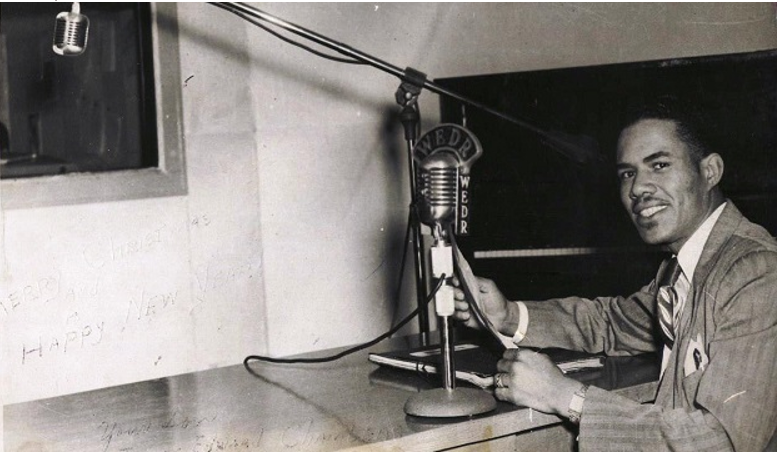
I leaned heavily on the knowledge and experience of Mr. Friedman, who had interviewed Rev. Faush in 1997. As I sorted through materials, I made sure to listen to his stories about influential figures in Birmingham radio and his recollections of Rev. Faush’s involvement with stations like WBCO and WENN radio. I also consulted existing collections on the BBRM website, which helped me understand how things had already been organized – as well as looking at anything that was already Rev. Faush-related – in order to gain more knowledge on the specific collection I was working on. As I became more familiar with the collection, I began to understand that organizing archival materials is ultimately a form of storytelling. The most rewarding part of this project was realizing how connected Rev. Faush was to the Black community of Birmingham. Talking to my mom and aunts about their memories of listening to figures like Rev. Faush and Paul “Tall Paul” White helped me connect the physical documents I handled every day to real people and lived experiences.
As my understanding of Rev. Faush deepened, so did my confidence in how to best present his collection. He wasn’t just a devout Christian and minister; he was also a gifted singer, a businessman, and had a great voice for radio. To reflect this complexity, I chose to arrange the materials in two main sections: first, a chronological organization of items directly related to Rev. Faush, followed by a thematic grouping of materials that were more broadly connected to his work and personal life.
Although the documents arrived out of order, I noticed that older folders often listed concerts he planned roughly every two months. Using those dates as a framework, I preserved the original folder groupings when possible, pairing them with corresponding letters and performance contracts. It felt like assembling a puzzle, each piece revealing more of the story and how Rev. Faush had planned things for the community.
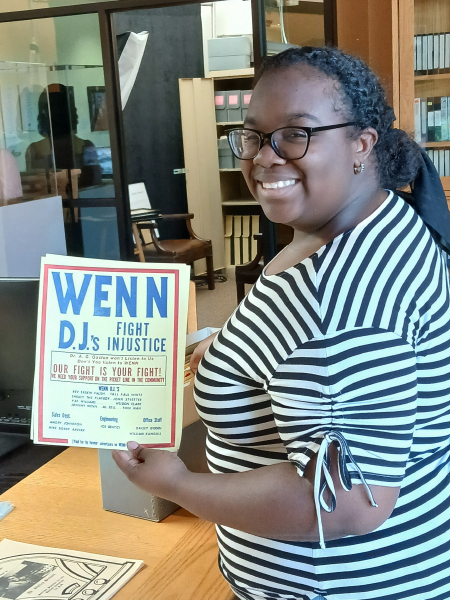
Cataloging materials ranging from handwritten letters to concert contracts and church programs gave me an intimate view of Rev. Faush’s dual legacy as both a media figure and community minister. Notable highlights of his collection included a 1965 telegram from Dr. Martin Luther King Jr., correspondence with gospel legends like Dorothy Norwood and James Cleveland, and various documents related to the 1976 WENN radio walkout. What was most interesting about the documents relating to the walkout was how Rev. Faush had collected various items from the event, like flyers, agreements, and news coverage. With the items found within his collection alone, another story could be told, particularly about the community at WENN radio.
Through this work, I not only developed practical archival skills in arrangement and description but also gained a deeper appreciation for the significance of Black radio as a cultural and organizing force in Birmingham. Rev. Faush’s broadcasts weren’t simply about gospel music; they were also lifelines of faith and empowerment for a community navigating the challenges of the civil rights era.
What inspires me most about BBRM is how it has evolved from personal oral histories and scrapbooks into a professional, community-rooted archive. As someone heavily invested in historical preservation, this internship made me realize that archives aren’t just about preserving—they’re acts of cultural care and a place of truth. Each folder I organized wasn’t just a set of documents, but part of a much larger story about Black self-representation, religious life, and a particular history in the South.
I’m deeply grateful to Director Bob Friedman and the BBRM team for welcoming me into this important work. This experience has not only expanded my archival skill set but also deepened my appreciation for Black media history. I leave this summer proud to have contributed to the legacy of preserving Birmingham’s Black radio voices.